
June 15, 2026
Climate Risk Integration for Danish Pension Funds and Investors: Reflections from the DICE 2026 Event
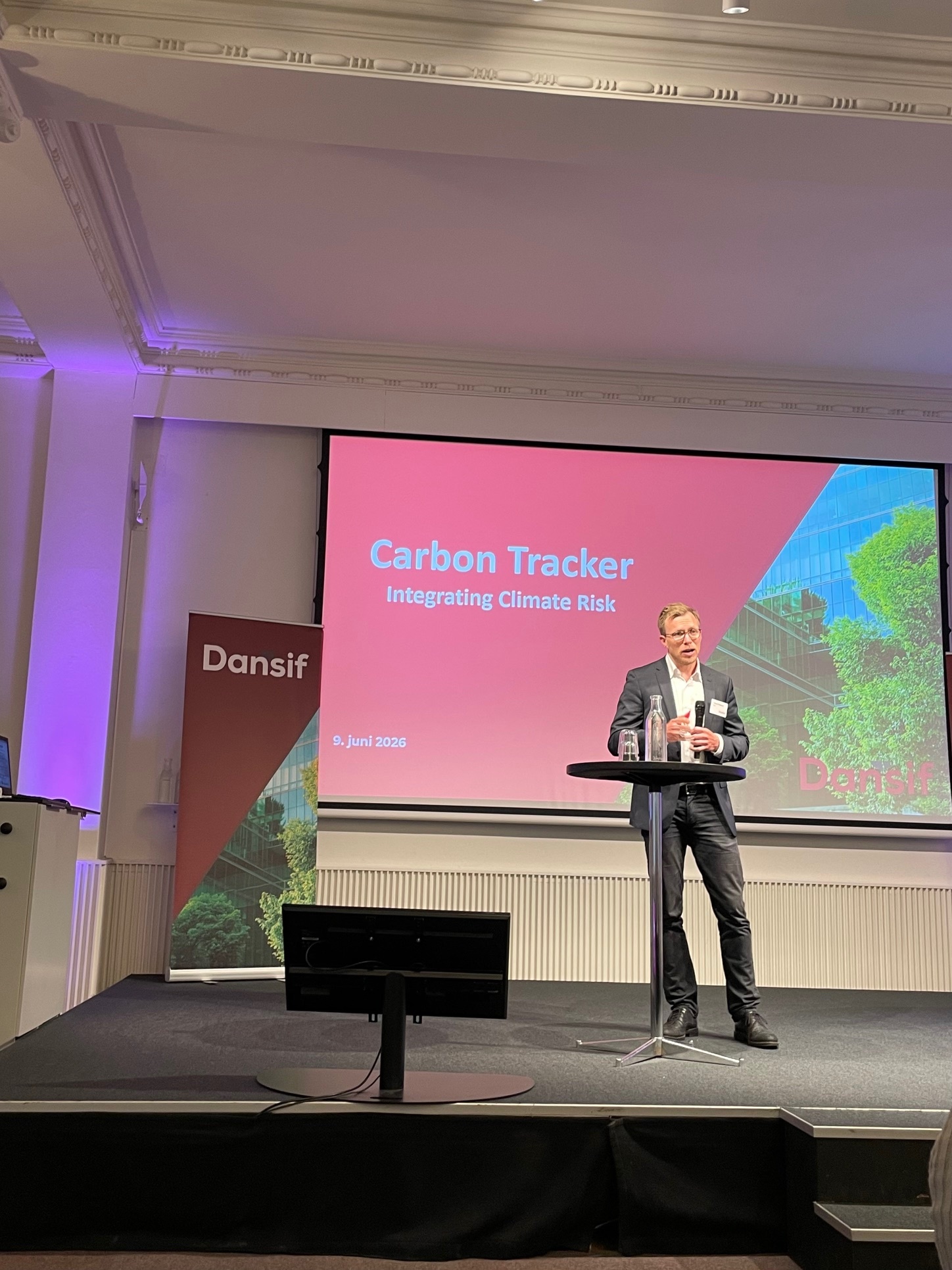
Recently, Envira co-organised a closed-door event in Copenhagen with Carbon Tracker and Dansif, bringing together Danish pension funds and investment professionals to discuss one question: how do you actually integrate climate risk into investment and risk management?
The event was held under the Chatham House Rule, so what follows reflects the themes of the discussion rather than attributing views to specific participants. But the conversations were substantive - and a few things stood out.
The problem with the models
The starting point for the event was a simple but striking observation. The climate models that investment professionals rely on - the integrated assessment models used for scenario analysis and stress testing - are built on economic damage functions that significantly underestimate the cost of warming. This is not a fringe view. Carbon Tracker, working with UCL's Professor Steve Keen, has documented it in detail. The science on tipping points, compounding physical risks, and non-linear climate impacts has moved well ahead of the models embedded in standard investment workflows.
This matters practically. If your scenario analysis is anchored to models that assume manageable and roughly linear economic costs from warming, you are likely underpricing physical climate risk in your portfolio - and you may be doing so in a way that is difficult to detect from the outside.
Where regulation is heading
A clear thread running through the morning was the direction of regulatory and supervisory expectations. Climate risk is no longer treated as a separate environmental topic by European supervisors. It is a financial risk, and it is expected to be integrated into investment processes in the same way that interest rate risk or credit risk is managed. That expectation is becoming more specific over time - covering scenario analysis, stress testing, and the ability to demonstrate that climate-related risks are understood at the asset level, not just at the portfolio level.
For Danish pension funds, this trajectory is relevant now. The ECB, EBA, and ESMA have all made clear that they expect financial institutions to move from acknowledging climate risk to managing it systematically. The Danish FSA has moved in the same direction. The question for the room was not whether to act, but how.
The gap between analysis and action
The most productive part of the discussion centered on the gap between what climate risk models produce and what investment professionals can actually act on. Scenario outputs are often expressed in terms that do not map cleanly to portfolio-level decisions. The uncertainty ranges are wide. The time horizons are long. And the methodological differences between models make it difficult to know how much weight to put on any single output.
Speakers from institutions including Baillie Gifford, Ortec Finance, NEST Pensions, and Norges Bank Investment Management (NBIM) gave presentations on how they approach this in practice. The common thread was the importance of being clear about what models can and cannot tell you - and of building internal processes that allow climate risk information to inform decisions without creating false precision.
What this means for the Danish market
A few practical conclusions emerged from the morning.
First, the methodological gaps in standard climate models are significant enough that pension funds should not treat existing scenario outputs as settled answers. They are useful inputs to a broader judgment, not a substitute for it.
Second, the regulatory direction is clear even if the specific requirements are still developing. Building the internal capacity now - the data, the processes, the governance - is preferable to retrofitting it under time pressure.
Third, and perhaps most importantly, the translation problem is hard but solvable. The challenge of turning climate science into investment-relevant intelligence is not fundamentally different from other risk-management problems the industry has solved before. It requires good data, good models, and the organisational capacity to use them.
Envira's role
Envira participated as co-organiser of the event. The themes of the day - asset-level data, the gap between climate science and financial decision-making, and the need for practically useful risk intelligence - are central to what we build. Our products exist precisely to close the distance between what climate data can tell you and what a risk officer, lender, or investment manager can act on.

%20(1).jpg)
.webp)
.webp)