
May 13, 2026
EnviraAgro on Danish National Television: Climate Risk, Farm Productivity, and Land Use
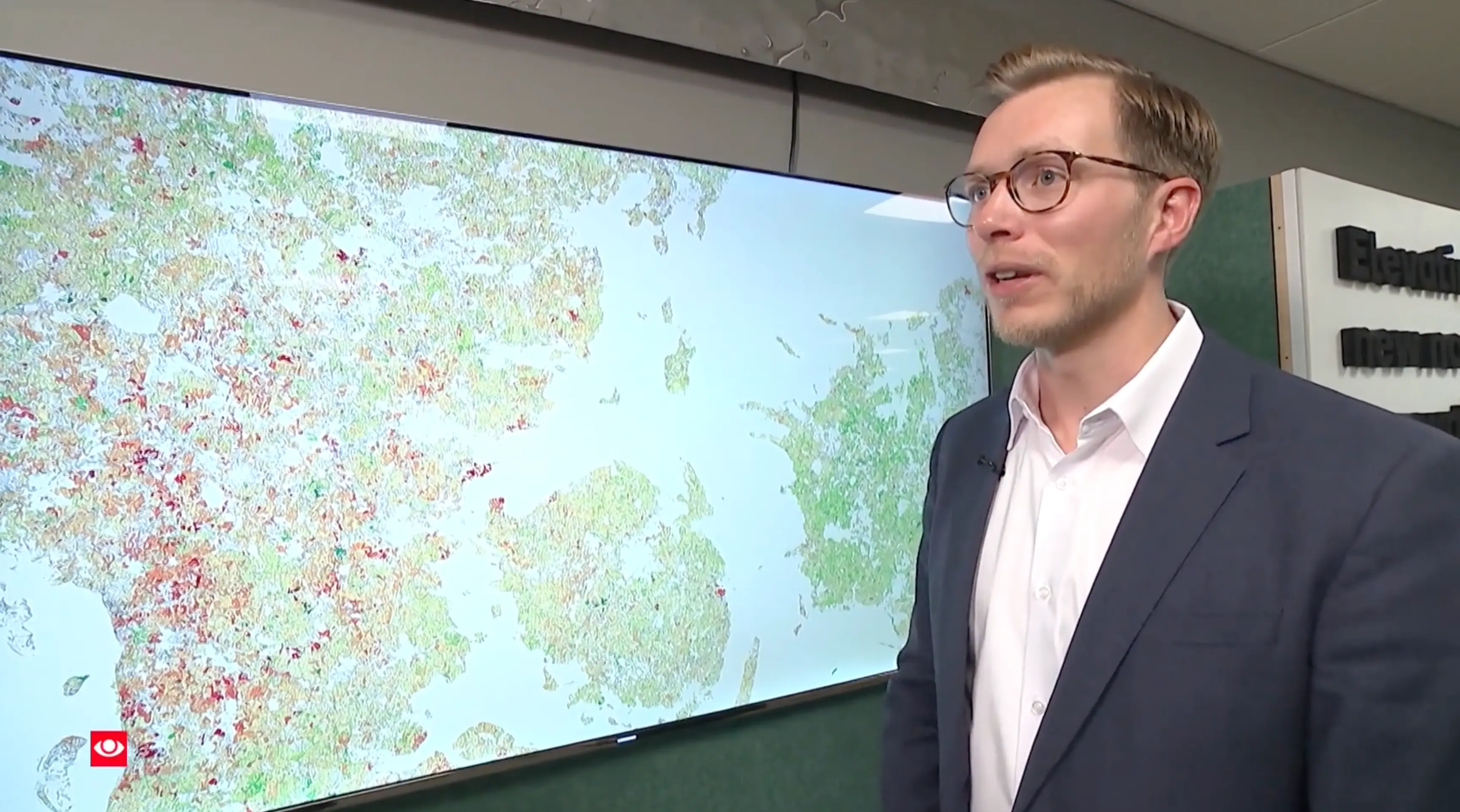
Climate change is already reshaping agricultural productivity across Europe. Its effects are increasingly visible at the field level, influencing yields, costs, and long-term land value. EnviraAgro featured on DR (Danmarks Radio) to explain why climate impacts must be considered when making decisions about future agricultural production.
The discussion highlighted a critical point for Danish agriculture. Climate risk is not evenly distributed, and land-use decisions must reflect this reality, particularly in the context of the Green Tripartite Agreement.
Climate Change Is Redefining Farm Productivity
Farm productivity is no longer driven by soil quality and management practices alone. Climate-driven factors now play a central role. These include increased flooding and waterlogging in low-lying fields, more frequent drought and heat stress, greater yield volatility from year to year, and accelerating soil degradation and erosion.
These impacts often vary significantly within the same farm. Relying on historical averages or municipality-level data can obscure persistent structural risks affecting specific fields.
Field-Level Climate Risk and Land-Use Decisions
The Green Tripartite Agreement seeks to reduce emissions, improve environmental outcomes, and maintain a viable agricultural sector. A key element of this transition is identifying which land should remain in production and which areas may be better suited for alternative uses such as nature restoration or water management.
Field-level climate analytics support this process by identifying fields with chronically low or declining productivity, areas exposed to long-term flood or drought risk, and land where future adaptation costs may exceed economic returns.
Incorporating these insights helps ensure that land is taken out of production based on structural risk and long-term suitability rather than short-term yield fluctuations.
Financial Implications Beyond the Farm Gate
Decisions about land-use change carry financial implications for multiple stakeholders. Climate-adjusted productivity assessments are increasingly relevant for farmers planning investments and long-term operations, for lenders and insurers assessing agricultural risk and asset values, and for policymakers designing compensation mechanisms and incentive structures.
Grounding these decisions in robust climate and geospatial data helps manage transition risks while supporting a resilient agricultural sector.
Turning Climate Insight into Practical Decision Support
EnviraAgro’s contribution on DR reflected a broader shift in agricultural decision-making. Climate risk is no longer an abstract concern. It is a measurable driver of productivity, financial performance, and land value.
Integrating climate intelligence into land-use planning enables more transparent, evidence-based decisions that align agricultural production with environmental and economic realities.
Looking Ahead
As Denmark advances its green transition, understanding how climate change affects productivity at the field level will remain essential. Decisions about which land stays in production, and which does not, must be informed by forward-looking climate risk, not only past performance.
EnviraAgro continues to support this transition by providing clear, science-based insights that help farmers, financial institutions, and policymakers navigate a changing agricultural landscape.

%20(1).jpg)
.webp)